
Our Location
304 North Cardinal St.
Dorchester Center, MA 02124

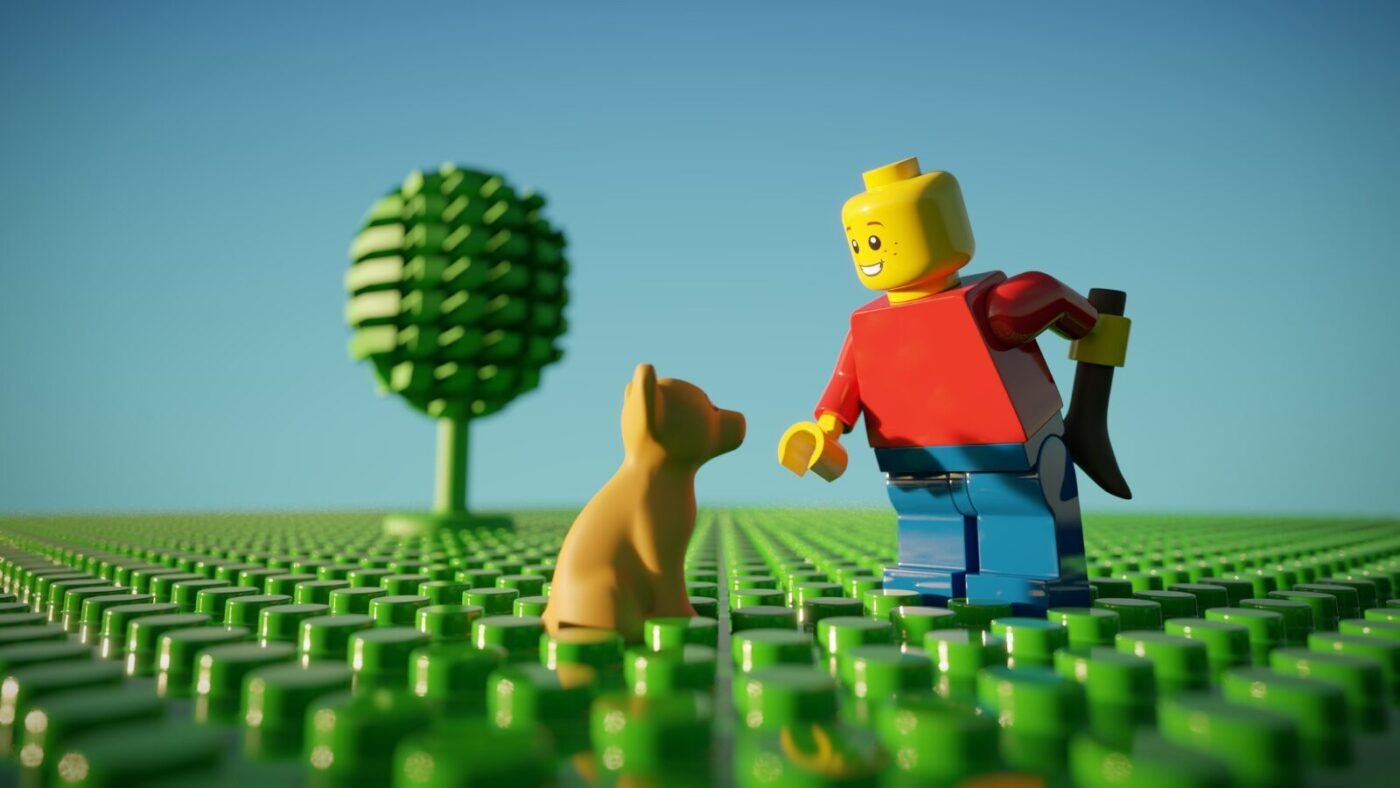
Welcome to CHIU STYLE, where we tell stories about The Secret Life of Everyday Things. Behind every seemingly ordinary object lies an extraordinary history—and LEGO bricks are one of the most iconic examples.
When you see a small plastic brick, you might think of toys scattered across a child’s bedroom floor, or the sudden jolt of pain from stepping on one in the middle of the night. But if you look closer, LEGO is not just a toy—it is a creative tool that has changed the world. It turned “play” into something more than passing time: a way of learning, thinking, and even communicating within families.
The LEGO story began in 1930s Billund, Denmark. At the time, Ole Kirk Christiansen was a carpenter struggling to keep both his family and workshop afloat. During the Great Depression, instead of giving up, he shifted toward making wooden toys—hoping to create a more stable business that could support both his family and employees.
In 1932, he officially entered the toy industry, producing wooden ladders, ironing boards, and various small toys. In 1934, he named the company LEGO, derived from the Danish phrase “leg godt”, meaning “play well.” The name was more than a brand—it was a statement: toys should not just be disposable entertainment, but meaningful experiences for children.
Early LEGO products were diverse, including wooden ducks, trucks, yoyos, and pull-along animals. They were well-crafted and brightly colored, gaining popularity at the time. As plastic materials became more advanced, Ole recognized new possibilities and purchased his first plastic injection molding machine in 1947, marking a revolutionary turning point.
In 1949, LEGO introduced “Automatic Binding Bricks,” the predecessor of today’s LEGO bricks. While still imperfect, they already allowed stacking and expansion. The real breakthrough came in 1958, when Godtfred Kirk Christiansen refined the iconic stud-and-tube coupling system. This design allowed bricks to lock firmly while still being easy to separate, creating the famous “click” sound that became a shared childhood memory for millions.
The true value of this system is not just that it connects—but that it allows infinite recombination. The same set of bricks can become a house, a car, a castle, a robot, or even an entire universe. Instead of asking children to follow a fixed outcome, LEGO lets them decide what the world becomes.
This is one of LEGO’s greatest strengths: it trains creativity, not single-answer thinking.
Compared to many modern toys, LEGO follows a very different philosophy. Video games, tablets, and console entertainment often provide instant feedback, strong visuals, and direct interaction. Children can quickly become engaged and quickly receive rewards. These products have value, but they are mostly content-driven: you are guided, and the system provides the answers.
LEGO works in the opposite way. There is no fixed storyline and no single ending. Children must think, experiment, and adjust. This slower form of play develops spatial awareness, patience, focus, hand-eye coordination, and the ability to recover from mistakes.
From this perspective, LEGO’s advantage is not stimulation—it is depth. It is not about quick excitement, but long-term engagement in the creative process. In today’s screen-filled world, this “low-tech, high-engagement” nature feels even more valuable.
LEGO is important not only because it is a successful toy brand, but because it changed how parents understand “play.”
In the past, toys were often seen as a way to keep children occupied. LEGO showed that play itself is a form of learning. When children build with bricks, they are practicing observation, decision-making, deconstruction, reconstruction, problem-solving, and completion.
These skills are not only useful in school—they are essential for how children will navigate the world in the future. LEGO helped parents realize that children are not passive consumers of entertainment, but active creators.
And this creativity brings strong emotional reward. Completing a build is not just “finishing a model”—it is the moment a child develops the belief: I can do this. That confidence is often more valuable than the physical result itself.
Of course, LEGO’s history has not been smooth. The company suffered multiple fires, losing large portions of its wooden inventory. After a major fire in 1960, it nearly abandoned wood entirely and fully transitioned to plastic production. For any company, these were major setbacks—but LEGO turned crisis into transformation.
In the early 2000s, LEGO again came close to bankruptcy due to overexpansion and intense competition. It was not a company without mistakes—it was a company that repeatedly chose to rebuild, refocus, and return to its core values. This is why LEGO still stands at the center of the global toy industry today.
What makes it admirable is not just success, but the ability to rebuild itself again and again.
Interestingly, the same LEGO set is played differently across cultures.
In Denmark, parents often emphasize free creativity. Children are encouraged to dump out all the bricks and explore freely. The focus is not on whether the result looks correct, but on whether imagination is being used.
In Asia, especially China, Japan, and Korea, themed sets and licensed collaborations are extremely popular. Franchises like Ninjago, Monkie Kid, and various anime collaborations are often collected quickly upon release. Many parents also enjoy building step by step using instruction manuals, as the sense of completion is clear and well-suited for shared parent-child experiences.
In the United States and the United Kingdom, large-scale sets, movie collaborations, and architectural series are particularly popular. Many parents view LEGO as a STEM toy that introduces engineering thinking and structural understanding through play. Different regions may play differently, but the shared truth is the same: LEGO is not just a toy—it is a tool that brings imagination into reality.
If you want to watch the video version of The Secret Life of Everyday Things, you can find it on YouTube Shorts. New episodes are released every Tuesday and Thursday, perfect for quick moments during commuting, meals, or breaks.
If what you love about LEGO is its blend of creativity, functionality, and personality, you may also appreciate everyday items that carry the same spirit.
For example, the CHIU STYLE Beagle Dog Ocean Blue Shoulder Bag is designed for those who value both practicality and individuality. Made from durable yet lightweight Oxford fabric, it is ideal for daily use. The interior is thoughtfully organized with multiple compartments and zipper pockets, fitting essentials like wallets, cosmetics, iPads, cameras, and more. The ocean blue tone paired with a beagle design makes it not just a bag, but a personal style statement.
Just like LEGO’s value lies not only in building but in endless recombination, a good everyday bag is not only about storage—it is about supporting your daily rhythm. This design brings together function, durability, and personal expression, allowing everyday life to carry a sense of aesthetic identity.
The story of LEGO reminds us that the most powerful inventions are often not the most flashy, but the ones that invite participation. It has survived fires, transformations, crises, and competition, eventually becoming a global symbol of creativity and education.
More often than not, what changes the world is not a single dramatic event, but thousands of small bricks slowly building something greater.
And that is what CHIU STYLE aims to share: everyday objects that quietly carry extraordinary stories.
We publish new articles every Sunday, and you are welcome to visit our YouTube channel to discover more The Secret Life of Everyday Things.
