
Our Location
304 North Cardinal St.
Dorchester Center, MA 02124

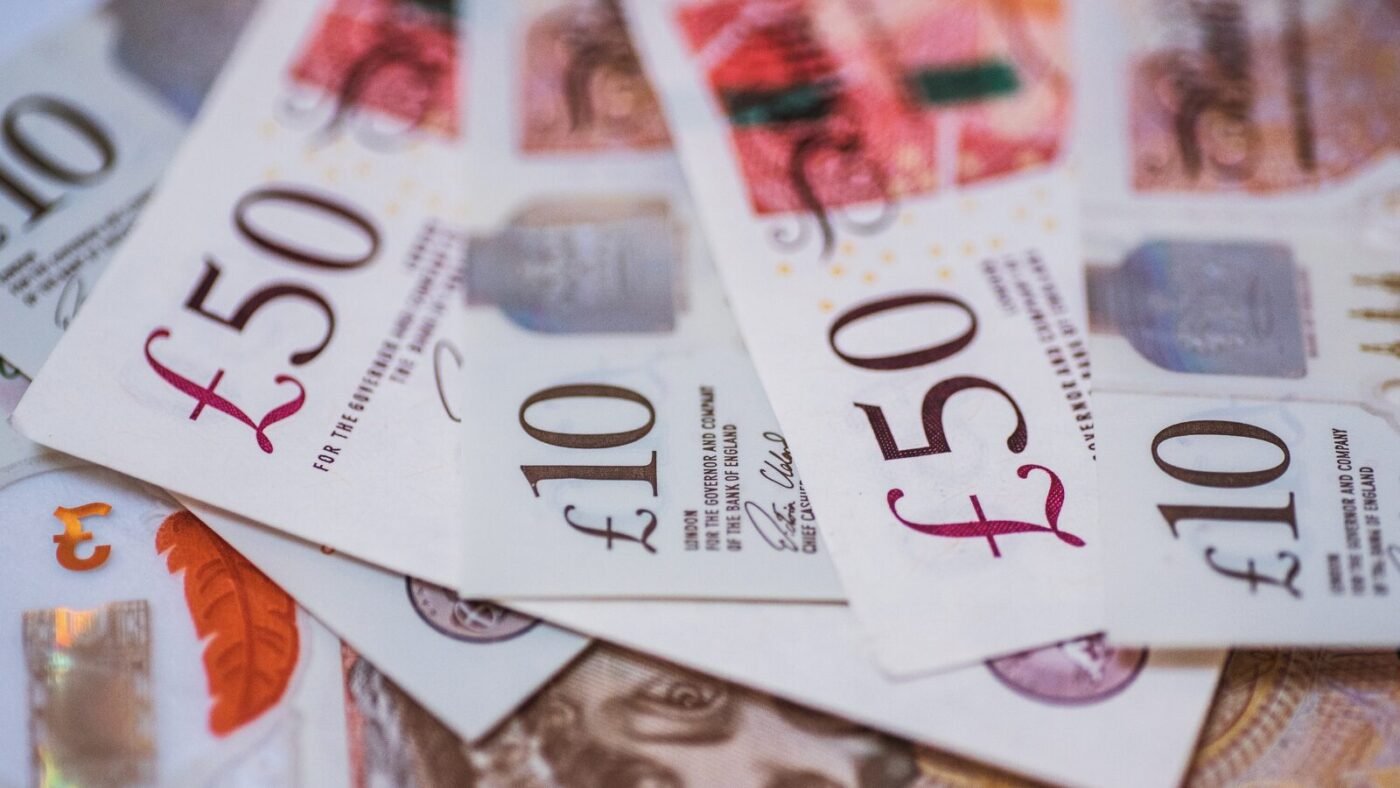
Imagine pulling a banknote from your pocket, or seeing a payment notification flash across your phone screen. It can buy you a cup of coffee, book a trip, or satisfy any sudden craving. Yet the thing we chase, worry about, and sometimes even fight over every single day has a story far more dramatic than a Hollywood blockbuster. Empires rose and collapsed because of it. Wars were fought over it. And its darkest chapters continue to quietly shape the world even today.
Welcome to CHIU STYLE, where we explore The Secret Life of Everyday Things — the hidden stories behind ordinary objects we often take for granted. In this series, we uncover the history, culture, and human nature woven into things you may have never stopped to think about before. And today, we’re following the long, twisted journey of one thing that touches every part of our lives: money.
Every day, you tap your card, make payments, and check your balance without giving much thought to what these actions really mean. But behind every transaction lies a tangled story of genius, greed, empires, and scandal-worthy drama. After reading this article and watching this video, you may never look at your wallet the same way again.
Do you think money began as coins or paper bills? In reality, humans once used stones, shells, and even cacao beans as currency.
Early societies were not purely based on simple barter systems. Direct exchange suffered from what economists call the “double coincidence of wants” problem: the thing you wanted to trade for was often not needed by the person holding it. This made transactions extremely inefficient. In many early communities, people actually relied more on systems of credit and social obligation — “I help you today, you repay me later.”
To solve this problem, humans developed commodity money. In parts of Africa and Asia, cowrie shells circulated for thousands of years because they were rare, durable, and easy to recognize. In China, shells even influenced the writing system; to this day, many Chinese characters related to wealth and finance still contain the “shell” radical. On the Pacific island of Yap, enormous stone wheels — some weighing several tons and measuring over three meters in diameter — functioned as currency. Remarkably, the stones themselves did not need to physically move during transactions; ownership simply changed through community recognition. In some ways, this resembles the logic behind modern digital currency.
The real turning point came in the 7th century BCE in Lydia, located in present-day Turkey. People began pressing electrum — a natural alloy of gold and silver — into coins stamped with official seals. By standardizing weight and value, trade became far more efficient and trustworthy. Around the same period, China was also developing its own unique coinage systems. By the Song Dynasty, China introduced some of the world’s earliest paper money, such as jiaozi and huizi. Merchants could deposit heavy copper coins and receive lightweight paper certificates in return, making long-distance trade dramatically easier.
During medieval Europe, the Knights Templar created an early international financial network. Pilgrims could deposit money in Europe and withdraw it later in Jerusalem, reducing the dangers of carrying wealth across long journeys. In many ways, this was a medieval version of international banking and currency exchange.
The 19th century saw the rise of the gold standard, which brought greater trade stability but also limited governments’ flexibility during economic crises. Spain famously transported vast amounts of gold and silver from the Americas back to Europe, only to trigger the “Price Revolution” — a wave of inflation that taught an important lesson: having more money does not necessarily mean becoming truly wealthier.
One of the most important shifts of the 20th century came with the Bretton Woods system and the 1971 “Nixon Shock.” Once the U.S. dollar was no longer convertible into gold, the world entered the era of fiat currency. Today’s money is no longer backed by physical gold, but by government credibility, legal systems, and — most fundamentally — collective human trust.
From shells and stones to coins, paper bills, and digital numbers glowing on our phones, the form of money has constantly evolved. Yet its core essence has never truly changed: money is a carrier of value and trust.
The evolution of money is, at its core, the evolution of trust systems. Early commodity currencies relied on the scarcity and usefulness of physical objects, while modern fiat currencies depend almost entirely on collective belief. Once trust begins to weaken — through hyperinflation, banking collapses, or financial crises — social stability itself can be shaken.
This also explains why people react so strongly to central bank policies, quantitative easing, or cryptocurrencies. Understanding this history helps us maintain a healthier skepticism in our personal financial lives. Money is not merely a tool; it is also a mirror reflecting power structures and social agreements.
And perhaps most importantly, it encourages us to ask a deeper question: is true wealth simply the accumulation of numbers, or is it the ability to create a life of security, freedom, and meaning?
Before exploring how money differs across cultures, it’s worth thinking more deeply about the challenges facing modern currency today.
Digital payments and cryptocurrencies are rapidly reshaping the nature of trust itself. Supporters of crypto assets like Bitcoin argue that they offer decentralized stores of value free from the control of any single government. Critics, however, point to their extreme volatility and massive energy consumption. At the same time, the development of Central Bank Digital Currencies (CBDCs) could give governments unprecedented control over the flow of money. While this may increase convenience and efficiency, it also raises concerns about privacy and the concentration of power.
On a psychological level, money profoundly shapes human behavior. Behavioral economics shows that people experience the pain of loss far more intensely than the pleasure of gain — a concept known as loss aversion. This helps explain why many people prefer leaving money in low-interest savings accounts rather than taking the risk of investing.
Understanding the history of money allows us to move beyond pure consumerism and toward more sustainable, conscious choices about value — a perspective that aligns closely with CHIU STYLE’s philosophy of slow living, sustainability, and plant-based lifestyles.
The history of money is far from clean or noble.
Colonial exploitation and the slave trade helped generate the original capital that fueled modern financial systems. After the American Civil War, the Freedman’s Bank promised financial support for formerly enslaved Black Americans, but mismanagement and fraud caused many people to lose their savings. To this day, it remains part of ongoing discussions about racial wealth inequality in the United States. During the British Empire, systems of indentured labor were also often compared to conditions resembling slavery.
Yet money’s history also contains remarkable stories of innovation and cultural creativity.
Paper money in China helped fuel commercial expansion and long-distance trade. Indigenous cultures in North America used wampum — shell beads carrying both ceremonial and monetary significance — as a sophisticated system of value exchange and storytelling.
Even today, debates between fiat currency supporters and gold standard advocates remain intense online. One side sees unlimited money printing as a hidden form of taxation through inflation; the other argues that flexible monetary systems help societies survive economic crises. Every time inflation rises or banks experience instability, these arguments erupt again.
Travel across the world, and you’ll discover that money seems to have different personalities depending on the culture.
In Germany and Japan, cash still plays an important role because people value privacy and tradition. Many traditional Japanese businesses continue to prefer cash payments. In contrast, China has become overwhelmingly mobile-payment driven — scanning QR codes has become second nature, whether in luxury malls or at street food stalls.
In Kenya, the mobile payment system M-Pesa allowed millions of people without bank accounts to use phones as financial tools, demonstrating a powerful example of “leapfrog development.” Meanwhile, some Nordic countries have stores that no longer accept cash at all, though central banks there have also begun questioning the risks of becoming fully cashless societies.
India’s 2016 demonetization policy — when major banknotes were suddenly invalidated overnight — gave the entire country a dramatic reminder that money systems can change almost instantly.
These global differences reveal something important: money has never been just numbers. It is a blend of culture, habits, institutions, and trust. The way you pay, save, or value different forms of money often reflects the deeper values of the society you live in.
After exploring the long and fascinating journey of money, it naturally leads us to another question: when we head out each day, how do we safely carry the things that matter most to us? Whether it’s cash, cards, documents, or daily essentials, we all need something reliable, elegant, and practical to carry them. That’s exactly why the CHIU STYLE Ocean Blue Shoulder Tote Bag has become such a favorite.
Made with premium waterproof fabric, this bag offers excellent durability and water resistance, helping protect your belongings in all kinds of weather. Its elegant floral design, spacious interior, multiple functional inner pockets, and comfortable shoulder straps make it perfect for work, commuting, travel, shopping, or casual outings — all while keeping your style effortlessly polished.
More than just a practical accessory, it’s an extension of your lifestyle. Just as currency evolved from heavy metal coins into lightweight digital systems, this tote bag transforms the idea of “carrying” into something lighter, more beautiful, and more dependable.
Whether you need a work bag spacious enough for a laptop and documents, or a stylish companion for weekend outings, the Ocean Blue Shoulder Tote Bag fits the role perfectly. Thoughtful details — including a convenient key hook for easy access — reflect careful attention to the realities of everyday life.
Want a quicker and more entertaining way to explore the hidden story of money?
Seeing Everyday Life Through New Eyes
Money is an essential tool in our lives, but it is also a symbol of power, a record of debt, and a promise of value. It reflects human nature — and reminds us that what truly matters is often not accumulation itself, but how we use value to create a more meaningful life.
Understanding the secret story of money won’t make your bills disappear, but it can bring a deeper sense of wonder and a healthier perspective on the world around us. We hope this article and video added a fresh layer of insight to your everyday life.
CHIU STYLE publishes brand-new blog articles every Sunday, and we’ll continue releasing more videos in our The Secret Life of Everyday Things series on YouTube. Be sure to subscribe and follow us as we uncover the overlooked beauty and hidden stories woven into daily life.
What everyday object would you most like us to explore next? Let us know in the comments below.
See you next time!
