

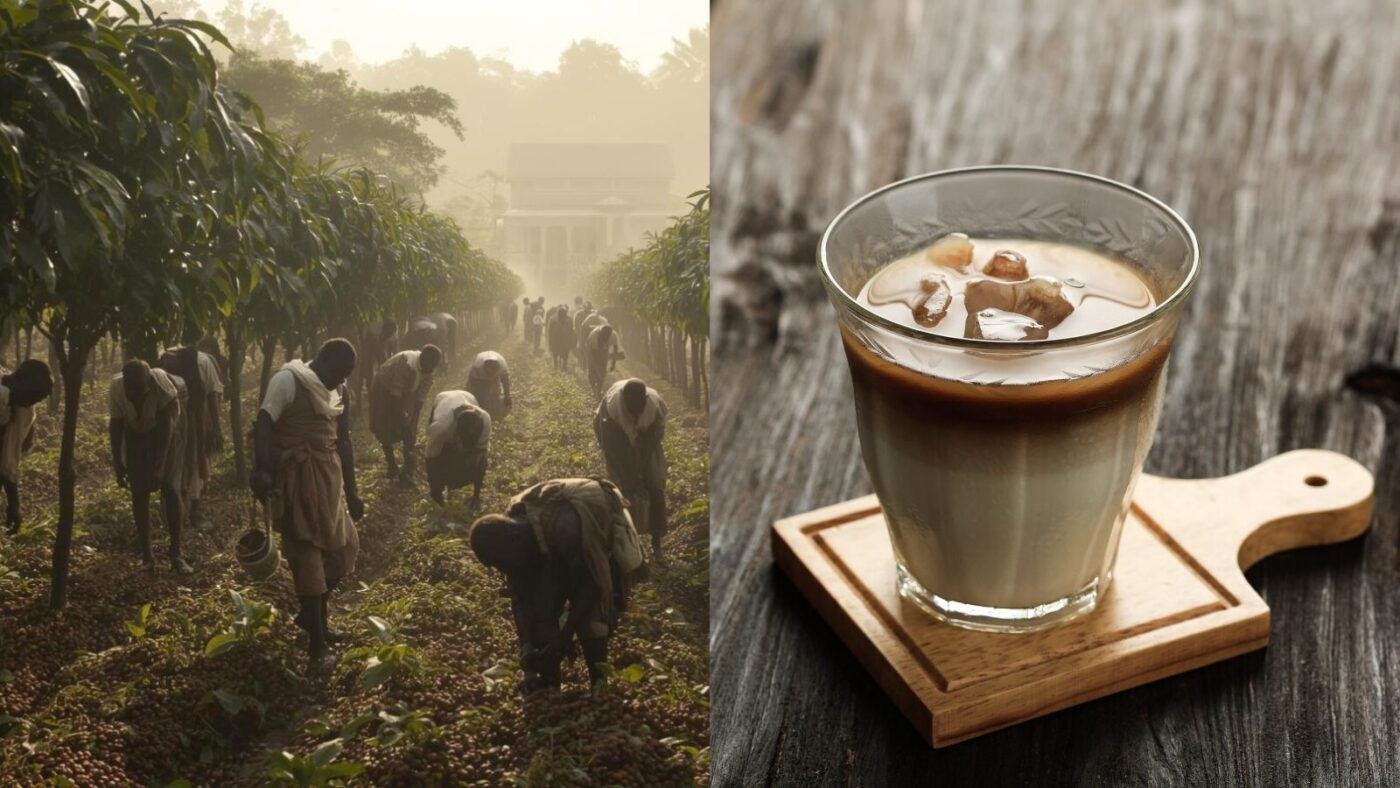
At CHIU STYLE, we love exploring “The Secret Life of Everyday Things”—those seemingly ordinary items we use every day that actually hide untold stories. A morning cup of coffee, or a pot of tea, offers familiar aromas and warmth, but if you pause and think carefully, every daily ritual carries history, culture, and even the labor of countless people.
Today, let’s start with coffee. Imagine this scene: you cradle a steaming cup of coffee, take a gentle sip, and the world seems to settle for a moment. Yet, when your eyes fall on your phone, you see an old photograph: workers bent over under the scorching sun, harvesting coffee beans, drenched in sweat, faces marked with exhaustion and resignation. Suddenly, you realize that what seemed like a simple pleasure has a hidden story behind it.
The Shadows Behind Coffee
This subtle sense of unease isn’t just in your mind. Since the 1700s, Santo Domingo (present-day Haiti) supplied half of the world’s coffee. The plantations relied heavily on enslaved people brought from Africa, working from dawn until collapse. Any lapse in their work could mean lashes or injury from machinery. Many did not survive more than a few years. The Haitian Revolution overthrew this system, the supply chain collapsed, European prices skyrocketed, and empires were stunned.
However, the system didn’t truly change—it simply shifted to Brazil and other colonies. Even after so-called “abolition,” forced labor persisted. In recent years, hundreds of workers have still been rescued from certified farms, having lost weight rapidly under extreme conditions, their health at serious risk. This history reminds us that the comfort of our daily lives may be built on the toil of others.
Different Cultural Experiences of Coffee
Interestingly, the same cup of coffee can evoke completely different feelings depending on where you are. In Europe, especially Italy or France, coffee is part of daily life. People sit at small tables, savoring every sip while chatting with friends, turning coffee into a ritual. For them, coffee isn’t just a stimulant—it’s a social and cultural symbol.
In the United States, coffee is more “fuel”—convenience and speed come first. Whether holding a giant latte while driving or sipping quickly between tasks at work, coffee serves efficiency rather than ritual.
Meanwhile, in coffee-producing countries like Brazil or Colombia, locals have a more complex relationship with coffee. They take pride in the beans they grow, yet feel frustrated when the best-quality beans are exported, leaving the cheapest for themselves. It’s like growing your own vegetables, watching someone else turn them into gourmet dishes while you eat the leftovers—a bittersweet paradox.
Turning Everyday Life into Conscious Choices
Understanding this history and reality doesn’t mean we can’t enjoy coffee or tea. On the contrary, it reminds us that we can make more conscious choices. Choosing fair trade and ethically sourced products ensures that each cup carries real value rather than perpetuating injustice.
This philosophy extends to our teas as well. For example, Caramelized Orange Black Tea offers rich layers of aroma, with notes of orange and caramel blending harmoniously for a smooth, lingering taste. It’s perfect for brewing on its own or using in desserts, like Caramelized Orange Black Tea Macarons. On our Blog, we share the full recipe so you can easily make it at home and enjoy the delightful combination of tea and sweets.
Caramelized Orange Black Tea Macarons Recipe
Ingredients:
1️⃣ Macaron shells (about 20-25 pieces)
- Almond flour: 110g
- Powdered sugar: 200g
- Egg whites: 90g (split into two portions)
- Granulated sugar: 50g
- Caramelized Orange Black Tea infusion: 20g (concentrated, flavorful but not too watery)
- Food coloring (orange, optional)
2️⃣ Tea-flavored buttercream filling
- Unsalted butter: 100g (softened to room temperature)
- Powdered sugar: 80g
- Caramelized Orange Black Tea infusion: 30g
- A pinch of salt
- A few drops of vanilla extract
Steps:
Step 1: Prepare the macaron shells
- Mix almond flour and powdered sugar, sift twice for a fine texture.
- Beat egg whites until foamy, add granulated sugar, and whip to stiff peaks.
- Fold the egg whites into the flour mixture in three portions, add the tea infusion, using a folding and cutting motion (don’t overmix—the batter should flow slowly with a “ribbon-like” tail).
- Add orange food coloring if desired.
- Pipe the batter with a round tip (about 1 cm) onto a baking tray.
- Tap the tray gently to release air bubbles, let rest at room temperature for 30-40 minutes until a thin skin forms on top.
Step 2: Bake
- Preheat oven to 160°C (adjust ±5°C depending on oven).
- Bake in the middle rack for 12-15 minutes (macarons should lift slightly from the tray bottom).
- Cool completely and carefully remove from tray.
Step 3: Make tea-flavored buttercream
- Beat butter until smooth, gradually add powdered sugar and whip.
- Mix in the tea infusion until fully combined.
- Add vanilla extract and a pinch of salt to taste.
Step 4: Assemble macarons
- Fill a piping bag with buttercream.
- Pipe cream onto one macaron shell and top with another.
- Press lightly to adhere.
- Chill in the fridge for 2-4 hours or overnight for better texture.
💡 Tips:
- Make sure the tea infusion isn’t too watery; 20-30g concentrated tea is ideal.
- Resting the macaron shells to form a thin skin is key for success—surface should be dry but not cracked.
- Sift tea infusion before adding to buttercream to avoid bits of tea leaves affecting texture.
Videos and More Stories
At CHIU STYLE, we update our Blog every Tuesday and Thursday, sharing more stories behind everyday objects and lifestyle inspirations. For more videos, visit our YouTube channel and explore the extraordinary stories hidden in ordinary moments.