

A Habit You Do Every Day Without Really Thinking About—And a Cup of Caramelized Orange Black Tea to Make Waiting Gentle.
If this is your first time at CHIU STYLE, welcome.
What we do here is simple—we take those everyday experiences that you rarely pause to think about and examine them from a fresh perspective.
Sometimes it’s a surprising historical story; sometimes it’s a little secret hidden in daily life. It doesn’t have to be inspirational, and there isn’t always a single answer. What matters most is that in the midst of busy routines and stress, you can find a moment of calm, a little relief, and a small “aha!” moment.
Today, we want to talk about something extremely ordinary—queuing.
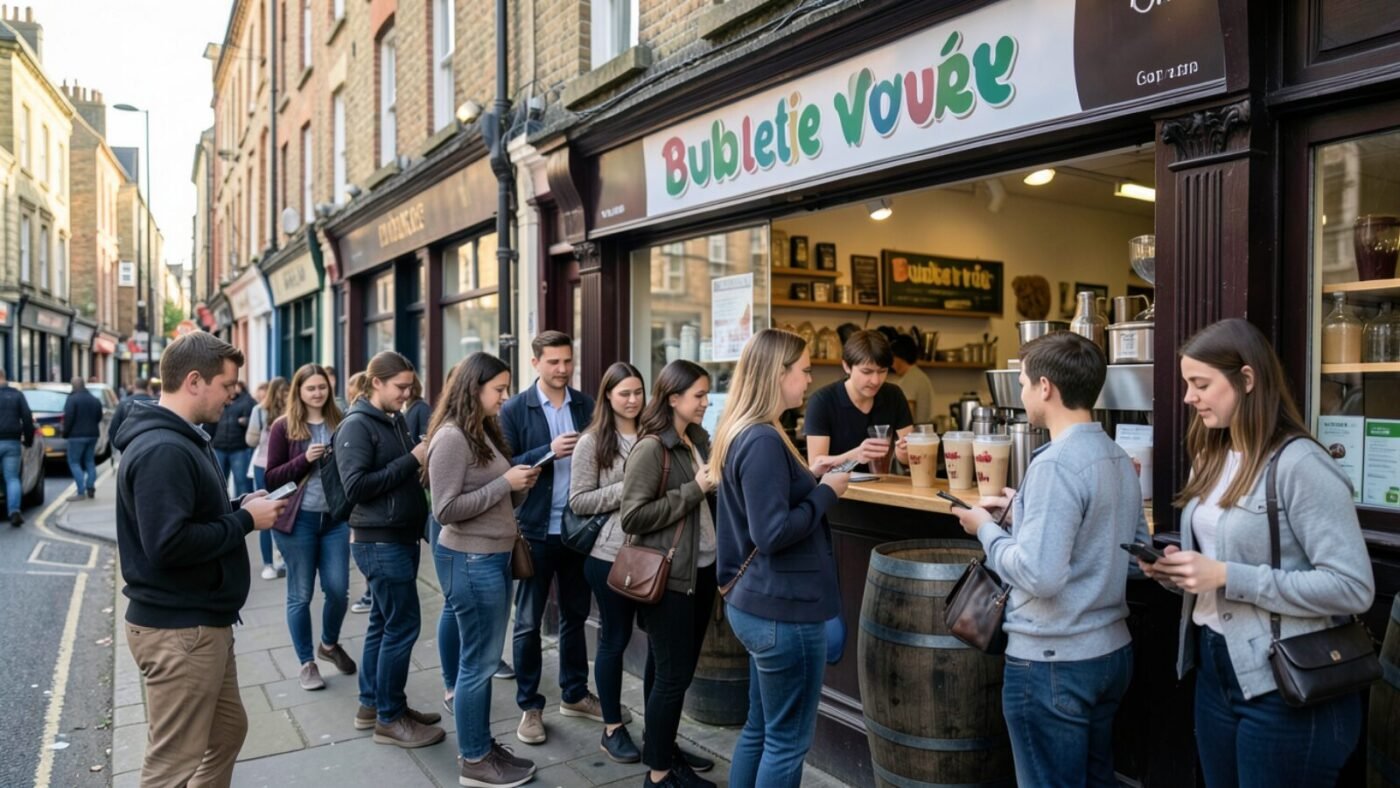
Have You Ever Wondered:
Why Do We Naturally “Agree” to Queue?
Imagine this scene.
You’re at the very end of a checkout line at a convenience store. There are still several people ahead of you, and your phone battery is down to 5%. Normally, this would be frustrating, yet you stand patiently, inching forward without complaint.
Why?
Most people would immediately think: “Because it’s fair—first come, first served. Everyone does it.”
It sounds reasonable, and it has become almost instinctive. But in reality, this answer isn’t entirely correct, and the true origin of queuing is quite different from what we imagine.
Queuing Isn’t a Sign of Civility
It Emerged From the Collapse of Trust
We tend to associate queuing with politeness, manners, and civilization. But if we go back to early 19th century Europe, the story is very different.
When the Industrial Revolution began, huge numbers of people moved from rural areas to cities. The streets of Paris and London became crowded with strangers who didn’t know each other. In the countryside, people could rely on relationships and mutual understanding during times of scarcity, but in the city, trust vanished.
When bread was scarce and crowds grew, without a shared system of rules, chaos was almost inevitable—pushing, grabbing, and sometimes even violence were common.
Queuing: A Survival Design
The first written account of proper queuing appears in Thomas Carlyle’s 1837 book The French Revolution: A History. He described Parisians lining up quietly to buy bread during shortages.
Before this, crowds surged forward, and only the pushiest could get what they wanted. Queuing wasn’t born from suddenly “being polite.” It emerged because, without some order, situations could spiral out of control in an instant.
The true purpose of queuing was simple: to make people predictable.
When everyone knew they had to wait their turn, chaos turned into orderly waiting.
Who Benefits from Queuing?
The first beneficiaries were merchants and authorities. Once people became predictable, there was no need for soldiers or security to maintain order. It was cheaper, simpler, and far more efficient.
Interestingly, the second beneficiary was us. When cutting in line became socially unacceptable, order could sustain itself without laws. A disapproving look or a polite “Excuse me, the back of the line is over there” was often more effective than any regulation.
Where Does That Anger Come From When Someone Cuts In?
That sudden irritation you feel when someone tries to jump ahead isn’t innate. It’s a reaction shaped over centuries.
Cutting in isn’t just about skipping your turn—it challenges the fragile system we’ve all come to rely on. That’s why the moment someone breaks the line, we feel violated on a very basic, almost instinctual level.
Queuing: Civilization or Compliance?
Some argue that queuing is the pinnacle of civilization, a demonstration of self-discipline and respect for others. Others note that those with real power rarely wait in line at all.
Both views have merit. Queuing prevents chaos but also teaches us to patiently surrender our time. Where you stand in this debate has no single right answer—but noticing it is already enlightening.
Does Waiting Have to Feel Torturous?
Speaking of queuing, have you ever noticed that if you have a cup of your favorite tea in hand, waiting suddenly doesn’t feel so bad?
That’s why we love
👉 Caramelized Orange Black Tea.
Its warm caramel notes blend with bright, fresh orange, and sipping it hot makes time feel slower, gentler. We even use it to make a dessert—a Caramelized Orange Tea Mirror Glaze Cake—perfect for slow, mindful enjoyment.
🎂 Caramelized Orange Tea Mirror Glaze Cake
This cake has distinct layers and a gentle, comforting flavor. The aroma of caramelized orange tea runs through the sponge, tea jelly, mousse, and mirror glaze, making it sweet but not cloying. It’s best enjoyed alongside a cup of hot tea.
Ingredients (6-inch cake)
Sponge Cake
- 4 eggs
- 80 g fine sugar
- 100 g cake flour
- 40 g vegetable oil
- 40 ml plant-based milk (oat or soy milk)
- ½ tsp vanilla extract
- Zest of one orange
Tea Jelly
- 200 ml Caramelized Orange Black Tea
- 30 g sugar
- 2 g agar powder
Vegan Mousse
- 150 g coconut cream (solid part, whipped)
- 100 g plant-based cream cheese or tofu-based cheese
- 30 g powdered sugar
- 30 ml tea liquid
- ½ tsp vanilla extract
Mirror Glaze
- 50 g sugar
- 50 ml water
- 50 ml plant-based milk (oat or coconut)
- 50 g vegan white chocolate
- 50 ml tea liquid
- 3 g agar powder
Steps
1. Bake the sponge cake
Preheat the oven to 170°C. Separate egg whites and yolks. Beat egg whites with half the sugar until stiff peaks form. Beat yolks with remaining sugar, then mix in vegetable oil, plant milk, and vanilla extract. Gently fold the yolk mixture into the egg whites, then sift in cake flour and fold gently. Pour into a 6-inch cake pan and bake 25–30 minutes. Cool and slice horizontally into two layers.
2. Prepare the tea jelly
Soak agar powder in cold water. Heat tea liquid with sugar until simmering, add agar, and cook 1 minute until dissolved. Pour into a mold and allow to cool slightly (not fully set).
3. Make the mousse
Beat plant-based cream cheese or tofu cheese with powdered sugar. Mix in tea liquid and vanilla. Gently fold in the whipped coconut cream to maintain fluffiness.
4. Assemble the cake
Place the bottom sponge layer in a cake ring. Spread mousse evenly, then pour the tea jelly over it. Chill for about 1 hour until set. Place the top sponge layer and press gently, then chill another 2 hours to set.
5. Prepare the mirror glaze
Soak agar powder, then heat sugar with water until dissolved. Add plant milk, tea liquid, and vegan white chocolate. Bring to a gentle simmer, make sure agar is fully dissolved. Cool to ~35°C and pour over the cake. Chill 30 minutes until glaze sets.
🎥 Watch the Video
A Small Thought to Carry With You
Next time you stand in a queue, you might quietly ask yourself: am I merely waiting, or participating in a collective agreement of patience?
If this article made you think just a little more, we’re happy.
📌 CHIU STYLE updates new posts every Wednesday and Friday
📺 You can also visit our YouTube channel for more videos exploring life, culture, and the little quirks of everyday life.
See you next time.