

At CHIU STYLE, we tell stories about the quiet mysteries hidden in plain sight —
The Secret Life of Everyday Things.
The objects we pass by every day aren’t always as ordinary as they seem. Some of them carry centuries of belief, fear, symbolism, and imagination.
Take mirrors, for example.
When a Mirror Feels… Off
Have you ever stood in front of a mirror in dim light just a little too long?
It’s late. The bathroom light is soft and low. You’re brushing your teeth. You glance up — only for a second — and something feels slightly out of sync.
Maybe your reflection blinked a fraction too late.
Maybe your mouth formed an expression you don’t remember making.
Logically, you know it’s just lighting. Just perception.
But your body reacts first — a quickened heartbeat, a chill along your spine — and you instinctively reach for the brighter switch.
You’re not alone.
So many people admit to this exact experience, especially at night. There’s something about darkness that makes mirrors feel less like surfaces… and more like thresholds.
Some describe seeing movement in the reflection that lags behind reality.
Others swear they once noticed a shadow in the mirror that wasn’t actually in the room.
These are fleeting moments — tiny “glitches” in normal life — but once you’ve experienced one, it’s hard to forget.
And that brief flicker of “What if?” is precisely how ancient superstitions survive.
The Origin of Seven Years of Bad Luck
“Break a mirror, get seven years of bad luck.”
Almost everyone has heard this. But why seven years?
To understand that, we have to travel back to ancient Rome.
Mirrors were not everyday household objects back then — they were luxury items. Rare. Expensive. Symbolic. Many Romans believed a mirror didn’t simply reflect your appearance — it captured a fragment of your soul.
To break a mirror was to damage that fragment.
But why seven years?
Because Romans believed life renewed itself in seven-year cycles. After seven years, the body and spirit would regenerate. The damage would heal. The misfortune would reset.
In that sense, the curse wasn’t eternal. It was temporary — a waiting period for renewal.
Even today, when we hear glass shatter, there’s often an instinctive flinch. Perhaps it isn’t just about safety. It may be an echo of beliefs carried through generations.
Mirror: Portal or Prison?
Long before modern psychology explained mirror illusions, ancient cultures treated mirrors as mystical tools.
In ancient Greece, a form of divination known as catoptromancy used reflective surfaces to glimpse the future. Water or polished metal acted as windows to the divine.
Interestingly, in some traditions, a cracked mirror wasn’t a bad omen at all. The fractures were believed to reveal distorted visions of another realm — a way to communicate with ancestors or deities.
In contrast, much of Western folklore began to treat mirrors as dangerous objects — capable of trapping souls or attracting spirits.
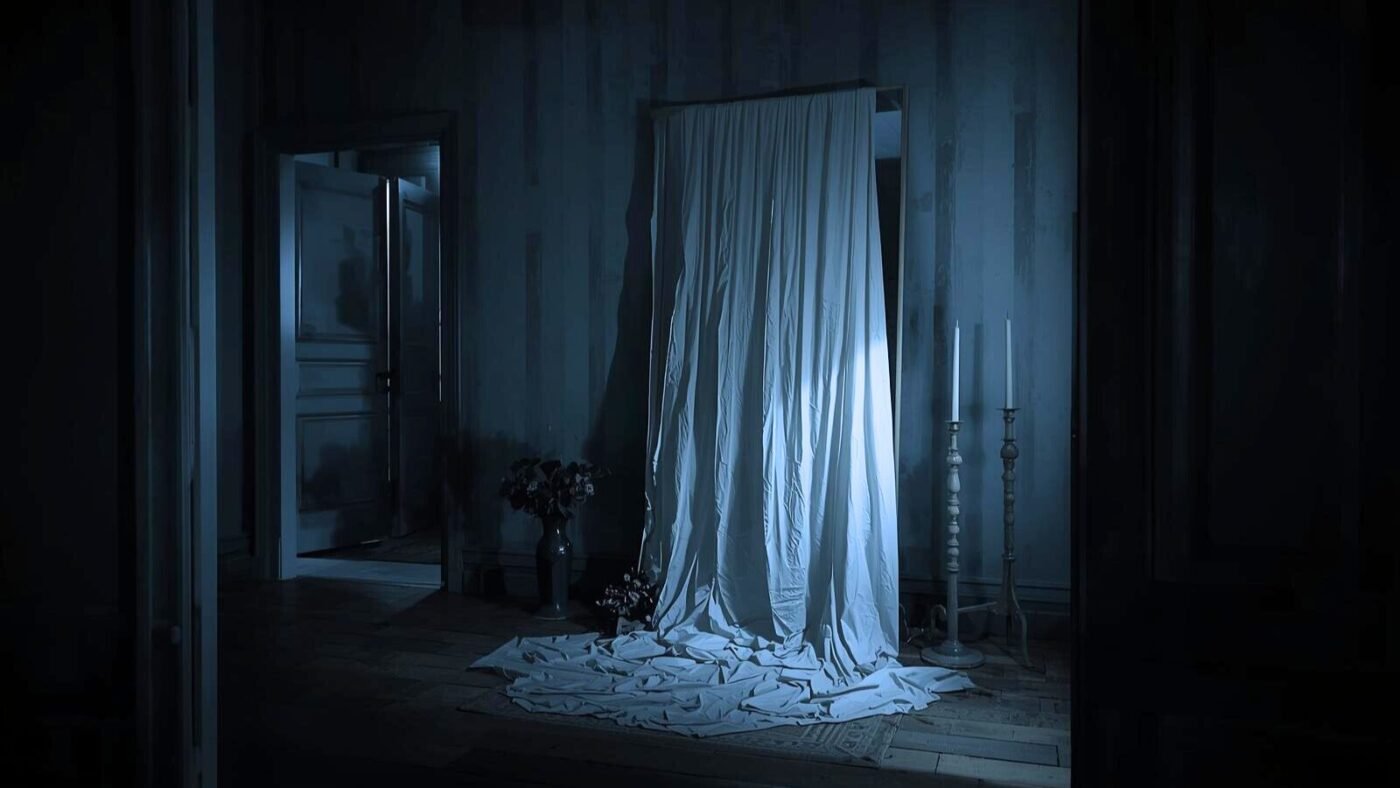
This belief is also why mirrors are often covered during funerals in various cultures. Some fear that the spirit of the deceased might become trapped in the reflection. Others worry something else might use the mirror as an entryway.
The same object can symbolize protection in one culture and danger in another.
And that contradiction makes mirrors endlessly fascinating.
Why We Still Feel Uneasy
Today, psychology offers explanations.
Staring at your own face in dim light for too long can cause perceptual distortions. The brain, adjusting to minimal stimuli, begins to “fill in the gaps.” Faces may appear warped or unfamiliar.
But knowledge doesn’t always override emotion.
When the house is silent.
When the lights are low.
When you’re alone with your reflection.
That quiet whisper of “What if?” is enough.
And that’s exactly what we explore at CHIU STYLE —
how ordinary objects hold extraordinary emotional and cultural histories.
🍮 A Sweet Way to Chase Away the Chill
After stories like these, it’s only right to bring warmth back into the room.
We created a comforting dessert inspired by its rich, layered aroma —
a smooth double-layer panna cotta-style jelly.
The bottom layer is silky plant-based milk pudding.
The top layer is a crystal-clear, bouncy tea jelly infused with deep caramelized citrus notes.
The amber hue glows warmly under soft lighting.
The fragrance is indulgent yet refined — caramel sweetness balanced with bright orange peel and robust black tea depth.
After spine-tingling stories, one spoonful brings everything back to calm.
🍮 Recipe (6 cups × 120ml)
🤍 Bottom Layer: Plant-Based Milk Pudding (Agar Version)
Ingredients
• 350ml milk (or soy/oat milk)
• 150ml plant-based whipping cream
• 25g sugar
• 4g agar powder
Instructions
- Mix milk and agar powder thoroughly to avoid clumping.
- Bring to a full boil and simmer for 1 minute (agar must fully dissolve).
- Add sugar and stir.
- Turn off heat and mix in plant-based cream.
- Strain.
- Pour into cups until 60% full.
- Let sit at room temperature for 10 minutes, then refrigerate about 30 minutes until firm.
👉 Agar must boil to activate properly.
🍊 Top Layer: Caramelized Orange Black Tea Jelly
Ingredients
• 400ml strong-brewed Caramelized orange black tea (1.5× strength)
• 20–30g sugar
• 3.5g agar powder
Instructions
- Mix tea and agar powder.
- Bring to a boil and simmer 1 minute.
- Stir in sugar.
- Cool to around 50°C (122°F).
- Slowly pour over fully set milk layer.
- Refrigerate 1–2 hours until firm.
🔥 Key Tips
✔ Bottom layer must be fully set
✔ Tea layer temperature around 50°C
✔ Avoid too much agar for better texture
Want to see more of this Hidden Wonders of Mirrors:
Mirrors have never been just objects.
They have been symbols of the soul, portals of belief, and vessels of imagination.
And at CHIU STYLE, we’ll keep uncovering the hidden layers of everyday life.
📅 New blog posts every Tuesday and Thursday
🎬 Visit our YouTube channel for more stories
Next time the lights dim and your reflection lingers a second too long —
maybe you’ll pause. Or maybe you’ll turn away… and brew something warm instead.