
Our Location
304 North Cardinal St.
Dorchester Center, MA 02124

At CHIU STYLE, we’ve always believed that everyday items each carry their own story. What we explore is not just their hidden secrets, but The Sustainable Life of Everyday Things—how seemingly ordinary objects evolve through history, and how we can make their future more sustainable and kinder to the planet.
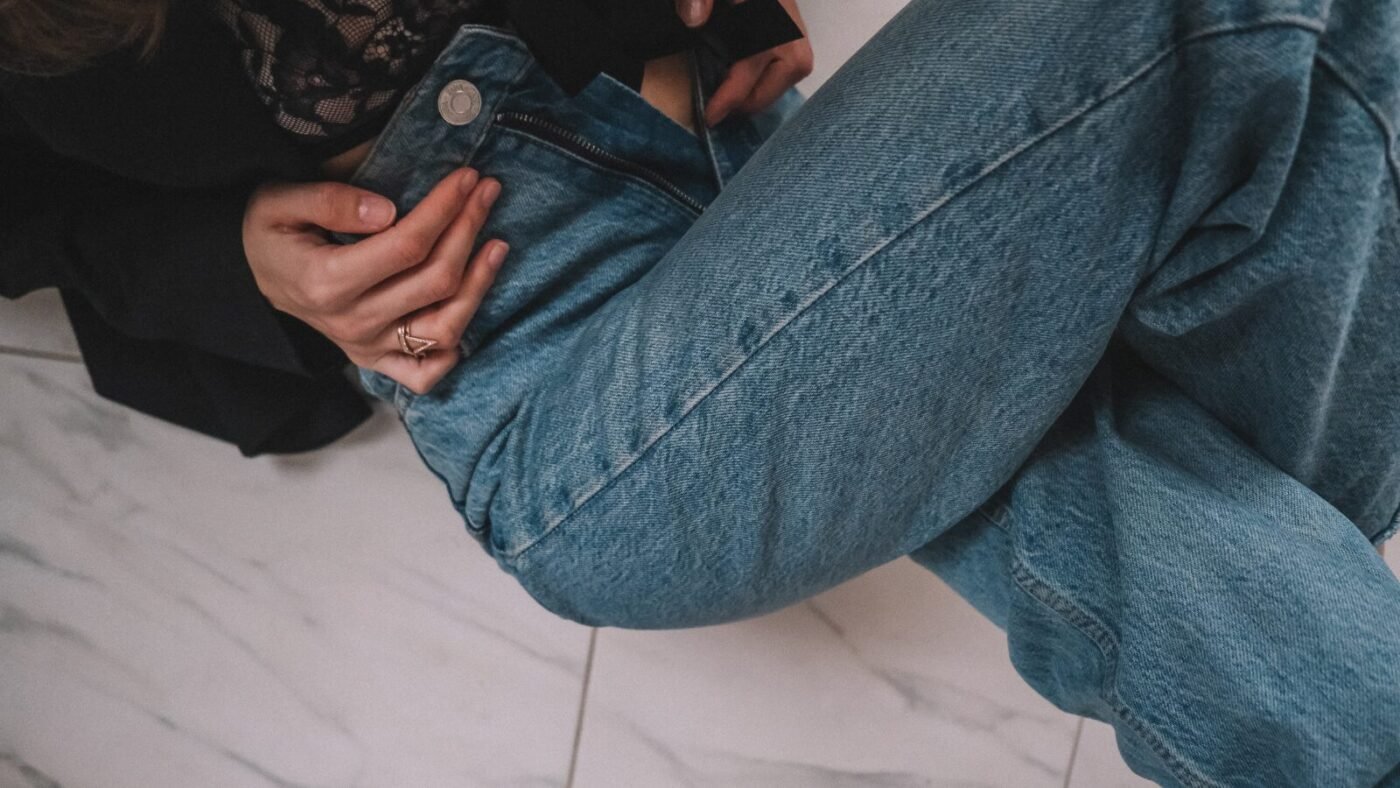
Today’s spotlight is something almost everyone has in their wardrobe: blue jeans. They accompany us to work, on travels, and during leisure time. They feel ordinary—but their history is filled with global connections, disruptive cultural shifts, and today’s urgent sustainability challenges. Let’s step into this intercontinental story together.
The story of blue jeans begins with ancient textile craftsmanship. The word denim comes from “Serge de Nîmes,” a durable twill cotton fabric produced in the southern French city of Nîmes. Its inspiration can be traced further back to Genoa, Italy, where sturdy fabric was known as “bleu de Gênes” (blue of Genoa)—the origin of the term “blue jeans.”
Originally, these fabrics were not used for fashion at all. They were made into sails, tents, or heavy-duty workwear for laborers. The iconic blue color came from valuable indigo dye, mainly imported from India and produced through traditional fermentation processes. It was not only durable but also excellent at hiding stains from hard labor.
In the mid-19th century, the story moved to the United States. In 1853, German-Jewish immigrant Levi Strauss arrived in San Francisco during the California Gold Rush. He originally ran a dry goods business. Later, he received a letter from tailor Jacob Davis in Nevada. Davis had discovered that miners’ pants often tore at the pockets and seams, so he reinforced them with copper rivets. In 1873, the two secured a patent together, officially creating modern riveted blue jeans. At the time, they were called “waist overalls,” designed for miners, cowboys, and railroad workers.
These trousers were extremely durable. Early versions were dyed with natural indigo and would fade over time, creating unique personal wear patterns. In the 20th century, they evolved from pure workwear into a symbol of the American Dream. During World War II, they were classified as essential goods, and American soldiers brought them to Europe and Asia. Hollywood Western films, along with rebellious icons like Marlon Brando and James Dean, transformed jeans into a symbol of youth rebellion, freedom, and individuality.
You might think blue jeans are purely an American invention—but in reality, they are a fusion of European weaving traditions, Indian natural dyes, and the entrepreneurial spirit of American immigrants. A truly global story.
Although blue jeans are one of the world’s most popular clothing items, their modern production model comes with serious sustainability challenges.
Producing a single pair of jeans is extremely resource-intensive. From cotton cultivation to finished product, it takes on average 7,000 to 10,000 liters of water—roughly equivalent to a person’s drinking water for two and a half years. The main causes are cotton farming and indigo dyeing.
Cotton cultivation relies heavily on pesticides and fertilizers, leading to soil degradation and water pollution. Traditional dyeing processes require repeated soaking, oxidation, and washing, generating large volumes of wastewater containing heavy metals and chemicals.
If untreated, this wastewater flows into rivers and oceans, causing severe ecological damage. In major production regions such as Bangladesh, China, and India, rivers turning blue or black have been widely reported, and local communities often suffer health impacts as a result.
Fast fashion further accelerates this cycle. Consumers buy cheap jeans, wear them only a few times, and discard them. As a result, hundreds of millions of jeans end up in landfills or incinerators each year, increasing carbon emissions and microplastic pollution.
Labor issues are also significant. Some factories within the supply chain face poor working conditions, long hours, low wages, and exposure to chemical dyes. These issues have been widely discussed in online media and environmental reports, prompting more consumers to question whether the seemingly ordinary pair of jeans in their wardrobe is silently carrying a heavy environmental and social cost.
In response to these challenges, global industries and brands have developed multiple innovations that point toward a more sustainable transformation.
First is material innovation—using organic cotton and recycled cotton. These approaches significantly reduce pesticide use and the demand for new water resources. Recycled cotton, made from old garments, also helps reduce textile waste while preserving fiber strength.
Second, dyeing technology has seen major breakthroughs. Waterless dyeing techniques, laser distressing, and plant-based or low-impact dyes can reduce water usage by up to 90%, while also minimizing chemical discharge. Some innovative brands even use fermented natural indigo bacteria or foam dyeing methods to maintain the classic blue while reducing environmental impact.
In product design, circular design has become a major trend: improving durability, enabling repairability, and using modular components. These strategies extend a pair of jeans from a lifespan of months to several years. Brands are also promoting second-hand platforms, rental services, and recycling programs, encouraging consumers to “wear longer, buy less.”
In addition, transparent supply chains and fair trade certifications are becoming more common. Consumers can now trace a product’s entire journey—from cotton field to store shelf—via QR codes, ensuring environmental and labor standards are met at every step.
These solutions show that sustainability does not mean abandoning jeans. Instead, it means redefining them intelligently—so this timeless wardrobe staple can continue to exist on a healthier planet.
When we reflect on the sustainable journey of jeans, we naturally think about everyday items that can last longer while reducing environmental impact. This is exactly the philosophy behind every CHIU STYLE product.
Take the CHIU STYLE Waterproof Solid Color Tote Bag – Modi Blue as an example. It perfectly reflects our commitment to sustainability and practicality.
Made with high-quality waterproof materials, it effectively resists rain and keeps your belongings dry and safe in any weather. With a spacious size (approximately 18.11″ x 12.99″ x 5.71″), a roomy main compartment, and multiple internal pockets, it keeps everything organized—ideal for commuting, shopping, or travel.
Its durable design means a longer lifespan, reducing the need for frequent replacements—one of the best ways to combat fast fashion overconsumption. The sturdy and comfortable shoulder straps support heavier loads, while the single-zipper closure ensures security. Maintenance is simple (hand wash recommended, avoid bleach), allowing long-term use.
The elegant Modi Blue tone paired with subtle branding strikes a balance between functionality and style, making it suitable for both work and leisure.
Choosing such a product is more than a style decision—it’s a commitment to sustainable living. Better materials and better design help reduce waste and extend product lifecycles. Carrying this tote bag is like continuing the spirit of blue jeans: durable, reliable, and timeless—just expressed in a more eco-friendly way.
Want to experience this blend of fashion and sustainability yourself? Click here to explore more details and discover the full CHIU STYLE tote bag collection.
From mining fields to city streets, from workwear to cultural icon, blue jeans remind us that every everyday object carries history and responsibility. Today, we have the opportunity to guide these stories toward a more sustainable direction through smarter choices.
At CHIU STYLE, we hope every product becomes part of your sustainable lifestyle. Next time you put on a pair of jeans or carry a tote bag, take a moment to reflect on the story behind it—and how you can help shape its future.
We update new articles every Tuesday, sharing more stories from The Sustainable Life of Everyday Things. You’re also welcome to visit our YouTube channel for full videos and weekly Shorts every Tuesday and Thursday, exploring the aesthetics of sustainability in everyday life.
Thank you for reading! If you enjoyed this article, feel free to share it with friends—and let’s make sustainability the new normal together.
